Operations
How Much Does It Cost to Start a Chauffeur Business?
A realistic breakdown of startup costs for a chauffeur or limo business, from the vehicle and commercial insurance to permits, website and working capital, plus ways to start lean with one car.
EazyLimo Team 7 min read
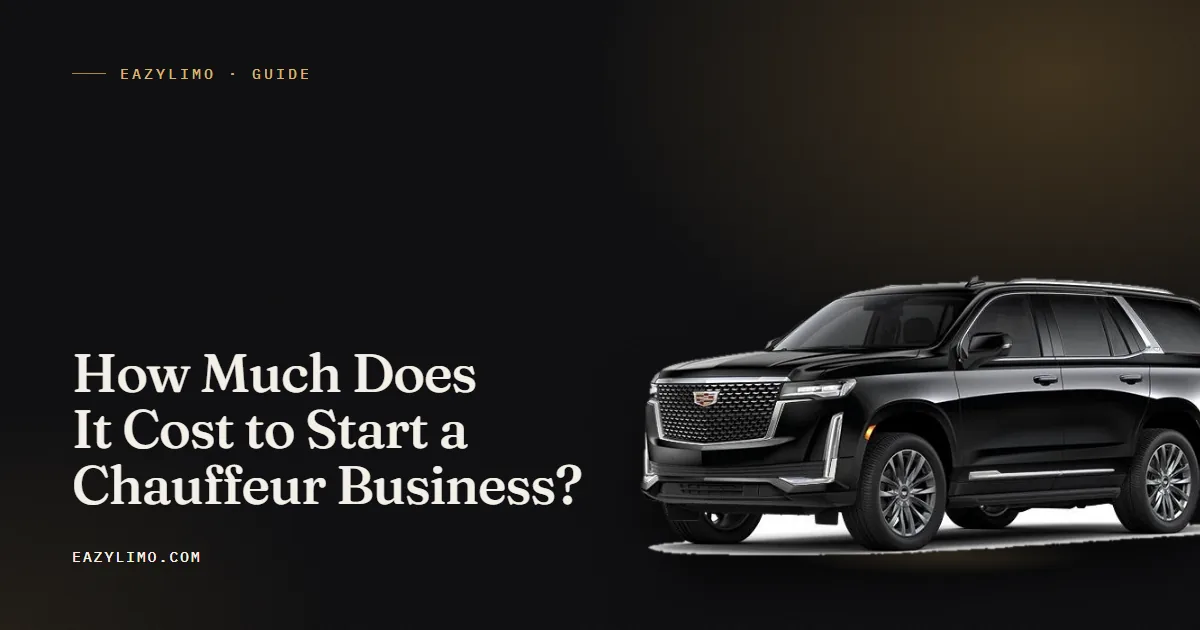
Starting a chauffeur business can cost far less than people expect, or far more, depending on the vehicle you choose, where you operate and how you insure it. There is no single number that fits everyone. What you can do is build a budget by category, get local quotes for each line and decide where to spend and where to save.
This article breaks the startup budget into the main categories, gives illustrative ranges so you know what to ask about, and ends with practical ways to start lean with one car. Every figure here is an example, not a quote. Insurance, licensing and permit costs in particular vary a lot from one state and city to another, so verify each line before you rely on it.
How to read the numbers in this article
The ranges below are illustrative, meant to help you plan conversations with insurers, dealers and local agencies. Your real figures depend on factors such as:
- Your state, city and county, and whether you serve airports.
- Your driving record, age and years of commercial driving experience.
- The vehicle type, age, value and passenger capacity.
- Whether you buy, finance or lease.
- How much of the work you do yourself, such as cleaning, marketing and bookkeeping.
Write your own budget in a spreadsheet with three columns: the illustrative range, the quote you actually received and the date of that quote. Quotes change, so keep them current.
The vehicle: buy used, buy new or lease
The vehicle is usually the largest cost and the biggest decision. Clients care most that the car is clean, comfortable, reliable and the right size for the trip. A late-model black sedan or SUV covers most airport and corporate work.
Buying used
A well-kept used luxury sedan or SUV a few years old can often be found in an illustrative range of roughly $20,000 to $50,000, depending on model, mileage and market. The upside is a lower purchase price and slower depreciation. The downside is a higher chance of repairs. Get a pre-purchase inspection, check the service history and confirm the vehicle meets any age or condition rules your city or airport sets for for-hire vehicles.
Buying new
New full-size luxury SUVs commonly sit well above $60,000 and can pass $100,000 for top trims. You get a warranty and a strong first impression, but also higher insurance and loan payments. Buying new makes more sense once you have steady corporate or contract work to cover the payment.
Leasing or financing
Leasing or financing lowers the upfront cash, often to a down payment plus a monthly payment. Before signing, check whether the lease allows commercial use, whether mileage caps fit chauffeur driving, and what the excess mileage charges are. A lease that forbids commercial use can create serious insurance and contract problems.
Commercial auto insurance
Personal auto insurance generally does not cover carrying paying passengers. You will need a commercial policy that covers for-hire passenger transport, and your city, state or airports may set minimum liability limits.
This is the line item with the widest variation. As an illustration only, operators often report annual premiums per vehicle anywhere from a few thousand dollars to well over $10,000, depending on location, limits, vehicle and driving history. New businesses with no claims history can pay more at first.
How to approach it:
- Find out the required minimum limits from your state, city and any airport you plan to serve.
- Get quotes from at least three insurers or brokers who work with livery and chauffeur businesses.
- Ask how the premium changes by vehicle choice before you buy the vehicle.
- Ask about payment plans, since paying monthly can ease the startup cash burden.
- Check what the policy requires for additional drivers if you plan to hire later.
Licensing, permits and business registration
Rules for chauffeured transport differ widely. Some states regulate limo and livery services at the state level, some leave it to cities or counties, and airports often have their own ground transportation permits and trip fees. Check with each of these, using their current official websites or offices:
- State agency: often a transportation department or public utilities commission handles for-hire passenger carrier authority.
- City or county: may require a livery or for-hire vehicle license, vehicle inspections and a chauffeur permit.
- Airports: many require a ground transportation permit, vehicle decals or transponders, and may charge per-trip access fees.
- Interstate trips: if you cross state lines, federal registration requirements may apply. Check the federal motor carrier resources before taking those trips.
Business registration itself is usually one of the smaller costs. Forming an LLC or registering a business name is often in an illustrative range of about $50 to $500 in state fees, plus any local business license. Many owners also pay an accountant a modest fee to set up bookkeeping correctly from day one. Budget for permits and registration together, and expect anything from a few hundred dollars to several thousand once airport permits are included.
Vehicle prep, phone, website and booking
Getting the car client-ready
Plan for a professional detail, tint if allowed in your state, floor mats, a phone charger, bottled water, an umbrella and a small first aid kit. Some cities require an inspection before a vehicle can carry passengers. An illustrative range for prep is a few hundred dollars up to about $2,000, depending on how much work the vehicle needs.
Phone and communication
A dedicated business phone number keeps work and personal calls separate and looks more professional. A basic business line or second number on your phone plan is typically a small monthly cost.
Website and booking
Customers expect to see your vehicles, rates and a way to book online. Options range from a free page builder that you set up yourself, to a custom website from a designer, to monthly booking software with a website attached. Monthly booking tools can add up over time, so compare the total cost over two or three years, not just the first month. Our guide to online booking for a one-car limo business covers what the booking side should do.
EazyLimo is one option here: a custom limo website with a built-in booking system that you pay for once and own (founding price $499 for the first 25 operators, then $999), with optional hosting at $199 per year, or $79 a month if you would rather not pay upfront. Payments go straight to your own Stripe or PayPal account. See pricing for details.
Marketing and working capital
Marketing to find your first clients
Your first customers usually come from people and places close to you. Budget a modest amount for:
- Business cards and a printed card for hotel concierges, wedding venues and event planners.
- A Google Business Profile, which is free to set up. Our Google Business Profile guide walks through it.
- A small test budget for search ads around airport and wedding keywords, if your market supports it.
- Your time spent visiting hotels, venues and local businesses in person.
An illustrative starting range is a few hundred dollars to about $2,000, but many operators spend more time than money in the first months.
Working capital
Working capital is the cash that keeps you running while bookings build up. Insurance, loan or lease payments, fuel, phone and maintenance keep coming even in a quiet week. A common planning approach is to hold enough to cover two to three months of fixed costs. Running out of cash in month three is a more common problem than a lack of demand.
Sample budget table
The table below is illustrative only. Use it as a checklist and replace each range with local quotes.
| Category | Lean start (one used car) | Higher-end start | Verify with |
|---|---|---|---|
| Vehicle | $20,000 to $50,000 purchase, or a down payment on finance | $60,000 to $100,000+ new | Dealers, lenders, lease terms |
| Commercial insurance (first year) | A few thousand dollars and up | $10,000+ possible | Three or more livery insurance quotes |
| Licensing, permits, airport access | A few hundred dollars and up | Several thousand dollars | State, city and airport offices |
| Business registration and setup | $50 to $500 | $500 to $1,500 with accountant help | State filing office, accountant |
| Vehicle prep and supplies | $300 to $800 | $1,000 to $2,000 | Detailers, inspection station |
| Phone, website, booking | Low monthly phone cost plus a one-time website | Custom build or monthly software | Compare 3-year total cost |
| Marketing | $300 to $1,000 | $1,000 to $3,000 | Printer, ad platform estimates |
| Working capital | 2 months of fixed costs | 3+ months of fixed costs | Your own monthly cost sheet |
Ways to start lean with one car
You do not need a fleet to start. A single well-run car can build a solid client base. Some practical ways to keep startup costs down:
- Start with one versatile vehicle. A black SUV can handle airport runs, corporate clients and small wedding parties.
- Focus on airport and corporate work first. These trips are frequent and repeatable. The solo airport chauffeur use case shows how that model works.
- Get insurance quotes before buying the car. The vehicle you choose can change the premium a lot.
- Avoid long monthly software contracts. Keep recurring costs low until revenue is steady.
- Take payment upfront or at the ride. Card payments at booking or cash to the chauffeur keep cash flowing without chasing invoices.
- Farm out overflow. When you get a request you cannot cover, pass it to a trusted partner operator instead of buying a second car too early.
- Price carefully from day one. Our guide to pricing airport transfers helps you avoid underpricing.
The right budget is the one built from your own local quotes. Once the vehicle, insurance and permits are sorted, a professional website with online booking is what lets customers find and book you. If you want that done for you for a one-time fee instead of a monthly bill, EazyLimo can help.